The Player, the Coach, the Perspective: Scott Fliegelman
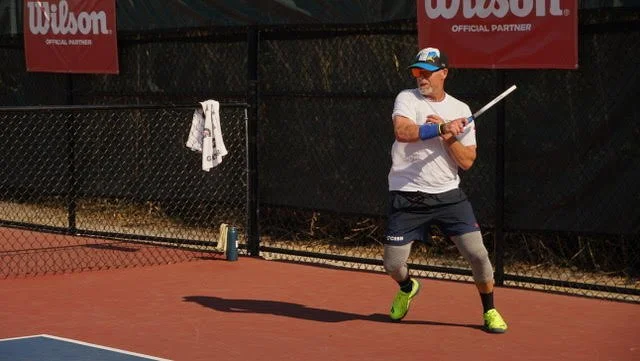
Most players think getting better at pickleball means hitting harder or playing more games.
That’s not what Scott Fliegelman sees.
I reached out to Scott—a coach and Senior Pro who’s worked with thousands of players from beginner to pro—and what stands out isn’t just his experience. It’s how he sees the game and the path that shaped him.
Simple ideas—but not easy ones. The kind that stick with you long after you hear them.
Want more like this?
👉 Join Picklebilly here JOIN HERE
You’ve done so much across different sports—what was it like growing up, and can you point to anything early on that helped shape your competitiveness?
I played almost every sport as a kid, but my very best memories were of my Dad coaching me in basketball from around age 8-11. He wore a suit, because he was often coming from work, but also because that’s what the top coaches of that era wore on the sidelines… I thought he was so cool! As tennis eventually took over for me and squeezed out time for other sports, my Dad took it in stride, and often would “coach” me from the sidelines during breaks in the action. He had zero experience with tennis, so I mostly just listened politely and thanked him for the advice, but every now and then he’d come up with a winning strategy, and we’d celebrate it the whole car ride home. He passed away before I started pickleball, which is a huge bummer, as I know he’d love to sit court side for all my big matches and share sage observations.
When you’re working out, do you listen to music? What are a few go-to songs or artists on your playlist?
I almost always have music playing when practicing, teaching, or working out… I get a little freaked out if it is too silent! 80’s is a solid go to for me, not surprisingly given my age, but I also dig classic rock and seem to play my best with Scorpions, G&R, or Zeppelin playing loud on the speakers at Boulder Pickleball!
What do you think separates players who improve quickly from those who stay stuck?
Racket sports players > stick n’ ball athletes > avid/ active/ athletes, in that order, generally progress faster than those without these experience sets. That said, some without any racket sport experience have the advantage of not needing to “unlearn” many habits, and often embrace the critical elements of the soft game sooner, compared with most converting tennis and racketball players.
What’s one mindset shift that changed your own game the most?
I’ve learned the value of daily “touches”, even at the 5.5+ level. It wasn’t by design, rather due to limited time, courtesy of my job as a pickleball facility owner and coach, I lack the ability to practice or play much with others my level… we’re talking like 2-3 opportunities per month! A very pleasant surprise, however, was the revelation that getting 3-4 hours daily of basic “touches”, while teaching players 2.5 - 4.5, has allowed me to continue to find incremental improvement, especially with the soft game. That was definitely not the case with tennis!
When you’re coaching, what are you noticing first that most players don’t see themselves?
Strike zone management is a huge issue, and mostly the fault of poor footwork, especially the lack of a split-step or even a brief pause. Without that critical skill, players are not composed and ready to raise their antennae in order to gather info from the opponent's’ inbound shot, their momentum is often going in the wrong direction, while springs (knees) are not loaded and ready to move to the ball. Net, net, too many players are too frequently not “swinging at strikes”, forcing them to use too much wrist or other poor techniques, losing a ton of accuracy, popping balls up, and making a lot of unforced errors.
What do you think most people misunderstand about high-level pickleball?
Speaking about Senior Pro pickleball, of which I have the most direct knowledge, it is helpful, if not a bit demoralizing for amateurs, to learn that 95% or more of the top players come with very high level tennis experience. Thankfully, with the young pros, we are starting to see top players coming up with pickleball specific training, and either minimal or no tennis experience at all. Hayden Patriquin is the best example and there are more on their way.
What still excites you about the game today?
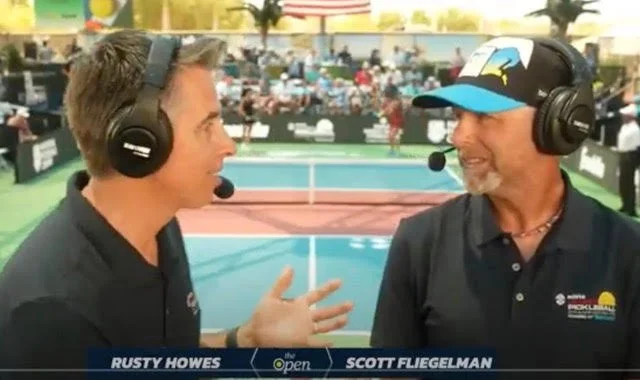
Hmmm… my honest answer is the growing impact I’m able to have as a coach. Locally, I’m grateful for the chance to have worked in person with nearly 5,000 players from total newbie to pro level. Over the past few years, I’ve been fortunate to scale my reach through social media, including audio and video podcasts, YouTube videos, and IG and FB short form instruction and tips. I’m still excited to compete, but slightly less so compared with coaching. That said, I “get” to compete in the 60+ category next year, which has me fired up, including a return to playing singles, now that I can play against kids my own age.
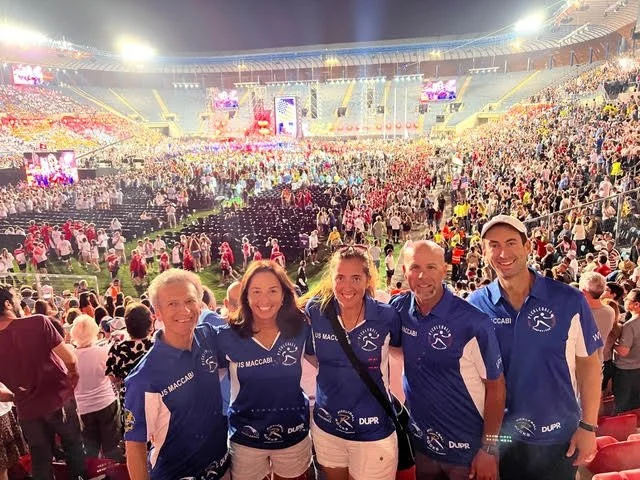
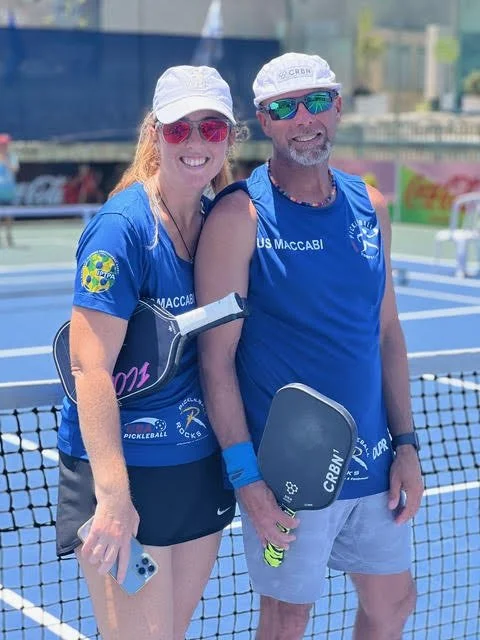
Some of our TEAM USA delegation at the 24th Maccabiah Games Opening Ceremonies in Jerusalem. Pickleball was an exhibition sport in 2022 and will be a medal event this summer!
You’ve competed in the Maccabiah Games in Israel and completed multiple triathlons—how has your broader athletic background shaped the way you approach pickleball and coaching?
I was fortunate to be a part of a group of Americans who went to Israel nearly four years ago to help promote pickleball. Now, the sport has really taken off in that country, and pickleball has been included in the 25th Maccabiah Games, scheduled for this July. I am really hoping the Games will go on with robust participation from the expected 80+ countries scheduled to send athletes, and that I’ll be able to represent the USA, along with my teammates from around the country.
My diverse athletic background includes college and pro tennis, pro snowboarder, elite age group triathlon, cycling, and running, and pro pickleball since 2019. I feel that collective experience contributes to my success as a pickleball pro in myriad ways, but perhaps most of all in acknowledging that “pressure is a privilege”. When I get butterflies in my belly before a big match on center court, I know that those are familiar and welcome sensations, which have led to success in the past. I coined a little phrase to help deal with those butterflies- “When pre-recorded for success, just press play”… of course, if we haven’t done the preparation, then the “music” doesn’t come out sounding quite as sweet as we would like, but that just serves to motivate us to better train the next time!
If this resonated, you’ll like what’s coming next.
I share:
Coaching insights from top players
Behind-the-scenes on how these trips actually come together
First access to new retreats (before they fill)